
“It can be challenging to move research out of a trial setting and into the commercial world. Farmers need sound, independent economic assessments of new agri-tech, so they can make informed decisions. This is where AbacusBio comes in. We identify the parameters needed to accurately build a commercial-scale model, then use that model to carry out a robust economic assessment and answer clients’ questions around the impact of variables within that system.”
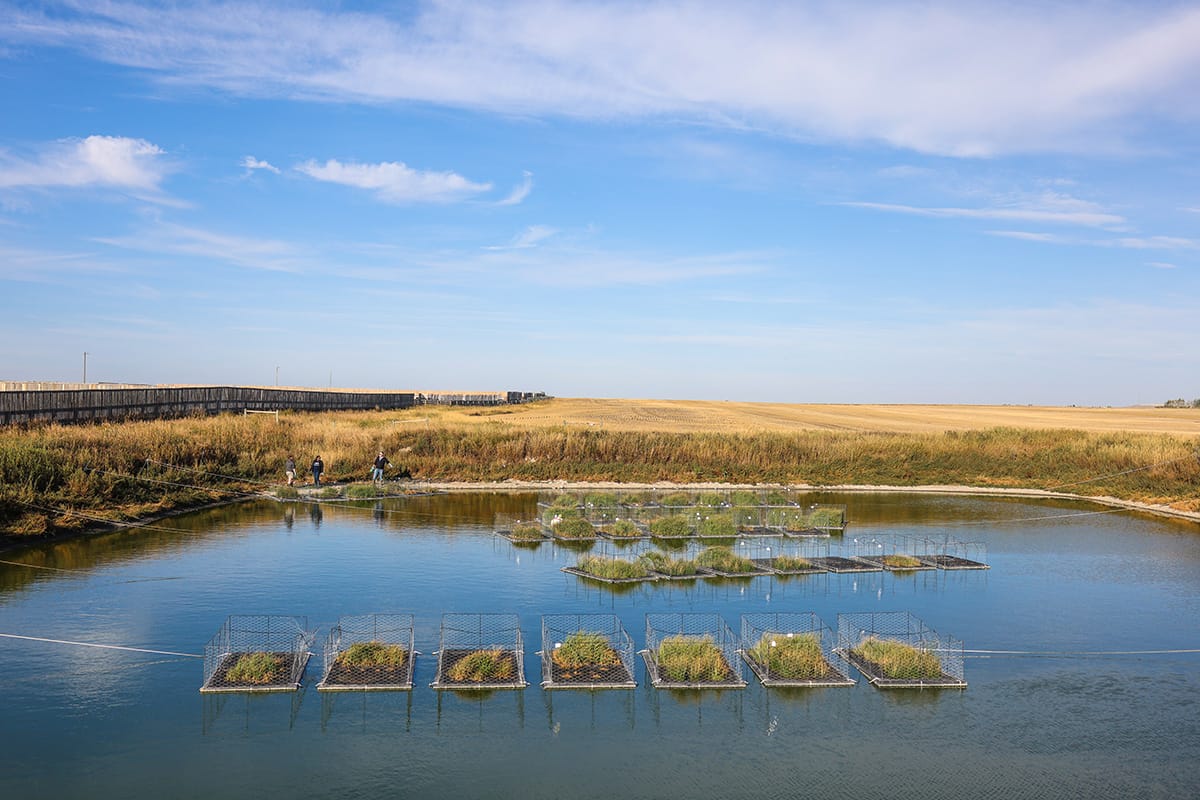
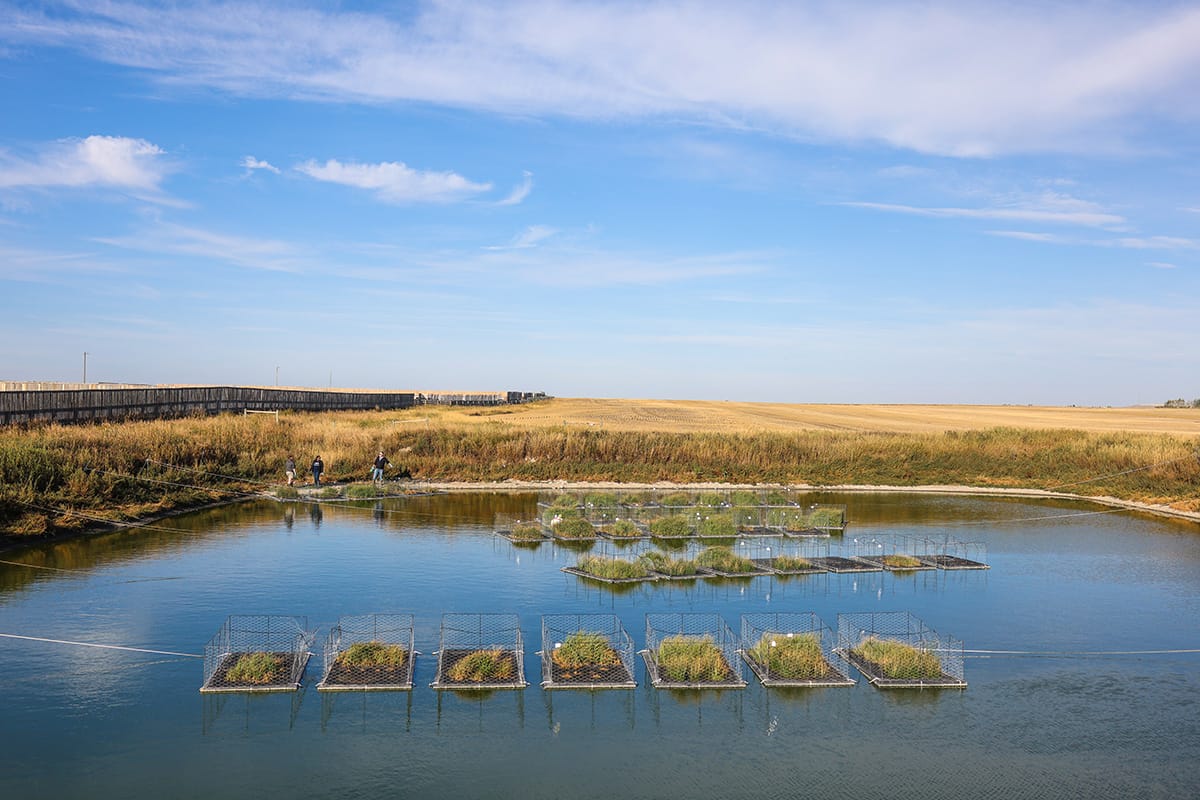
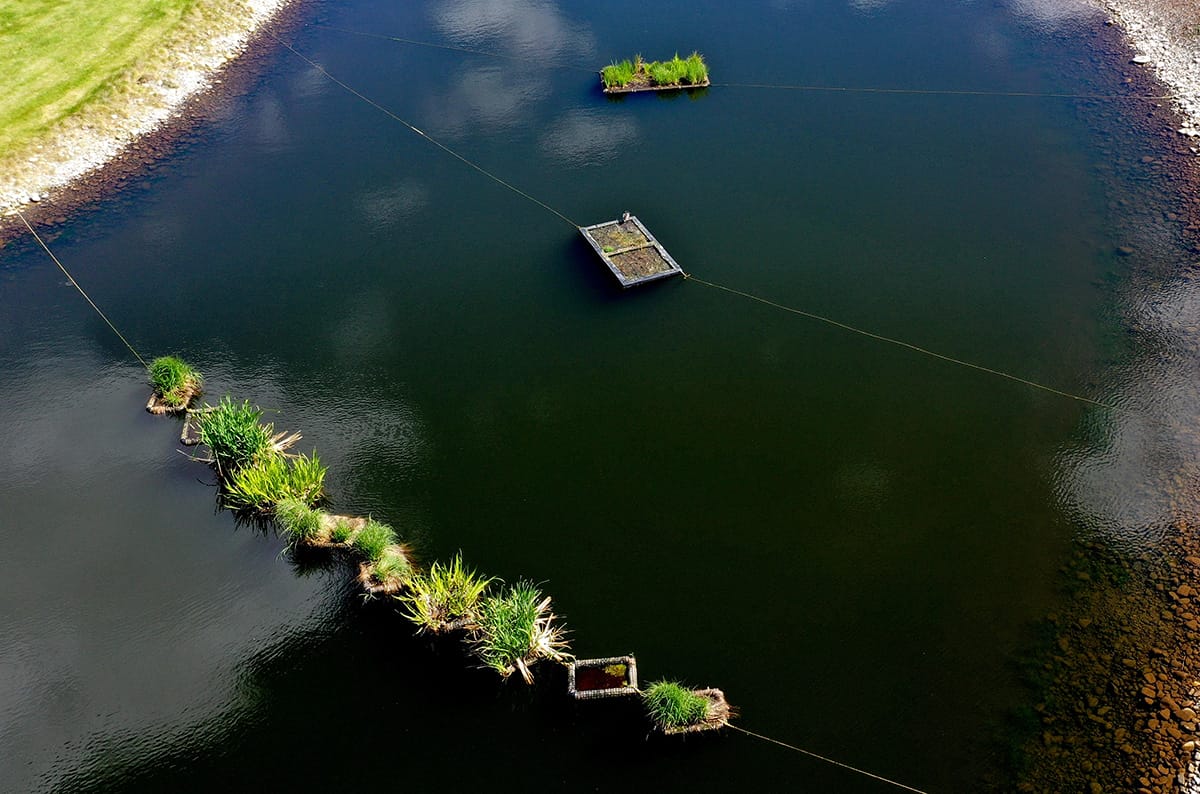
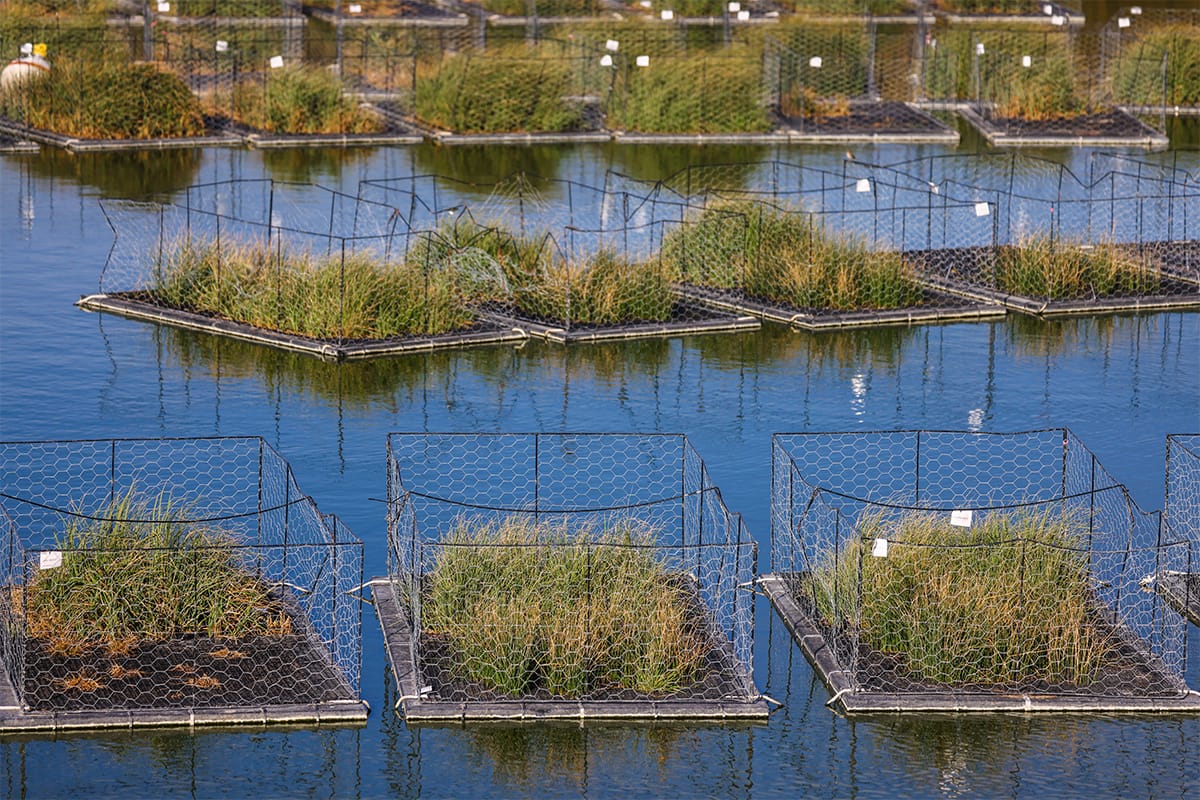
“Floating islands” are a relatively new technology being investigated for the treatment of animal feedlot run-off water. These modular rafts are planted with native wetland plants and float on the pond, with the roots absorbing nutrients and reducing water volume via transpiration. Olds College of Agriculture & Technology in Alberta, Canada, is conducting the research and contracted AbacusBio to help understand economic feasibility of the technology.“

Martin Howes
Background: Traditional treatment of feedlot run-off water
Feedlots generate contaminated run-off water as a result of rainfall and cleaning processes. The water contains manure, urine, feed residues and other organic materials. Feedlot surfaces are gently sloped, to direct water flow toward a containment area. Ultimately, the accumulated run-off is collected in a man-made pond, where it is stored and treated.
Existing run-off water treatment technologies are:
- Feedlot pond system
- Biological treatment, and
- Mechanical and chemical processes.
Floating islands
The floating islands project at Olds College started in 2018 and has progressed to a point where the islands’ economic performance in real-world agricultural systems must be assessed.
Olds College has expertise in applied research and AbacusBio complements this by providing independent economic assessments of agricultural technologies. This can be needed to meet funding requirements and ultimately helps farmers make informed decisions around the adoption new technologies.
How AbacusBio is adding value
AbacusBio’s analysed the floating islands’ economic viability by developing a simulation model based on 10,000 head of cattle over one calendar year. This allowed the Olds College researchers to assess the impact of the islands when scaled up to a commercial-sized farm.
Step 1: We used local, peer-reviewed industry data to accurately quantify the run-off and nutrient loading of a typical Alberta feedlot pond system.
Step 2: With the simulation model established for a 10,000-head feedlot, we then introduced floating islands into the system – using Olds College research findings on nutrient uptake and transpiration rates – to evaluate the islands’ commercial-scale impact.
Step 3: The researchers could then explore economic considerations around using floating islands on-farm. For instance:
- What is the economic value of the environmental benefits of reduced nutrient loads?
- What are the marginal economic benefits of transpiration, given there is less run-off effluent requiring application land?
- How do floating islands perform economically, compared to feedlot ponds, biological treatment and mechanical-chemical systems?
Project Outcomes
By providing economic values around floating islands technology in real-world terms, AbacusBio was able to bridge the gap between science and commercial operations – a critical step, if research is to transition across into on-farm practice.
The Olds College Technology Access Centre for Livestock Production Director, Sean Thompson, indicated that the AbacusBio modelling allowed the project team to place an economic value on floating island technologies, beyond the simple investment costs. The analysis provided key information that was needed by the livestock industry in order to inform on-farm adoption decisions. “We were able to confirm the effectiveness of floating island technologies to remediate runoff water, but an economic assessment was required to determine whether this would be feasible for a typical feedlot operation in Alberta,” says Thompson. “The results unfortunately confirmed that this may not be a cost-effective technology for operations with larger retention ponds. However, the report has helped direct our research in terms of new areas of focus where the presence of floating islands may be more impactful (e.g. dugout water quality).”
More information
Olds College article: Initial results of floating islands research
AbacusBio contacts
Martin Howes – https://abacusbio.com/staff/martin-howes-bs/
Matthew Newman – https://abacusbio.com/staff/matthew-newman/