

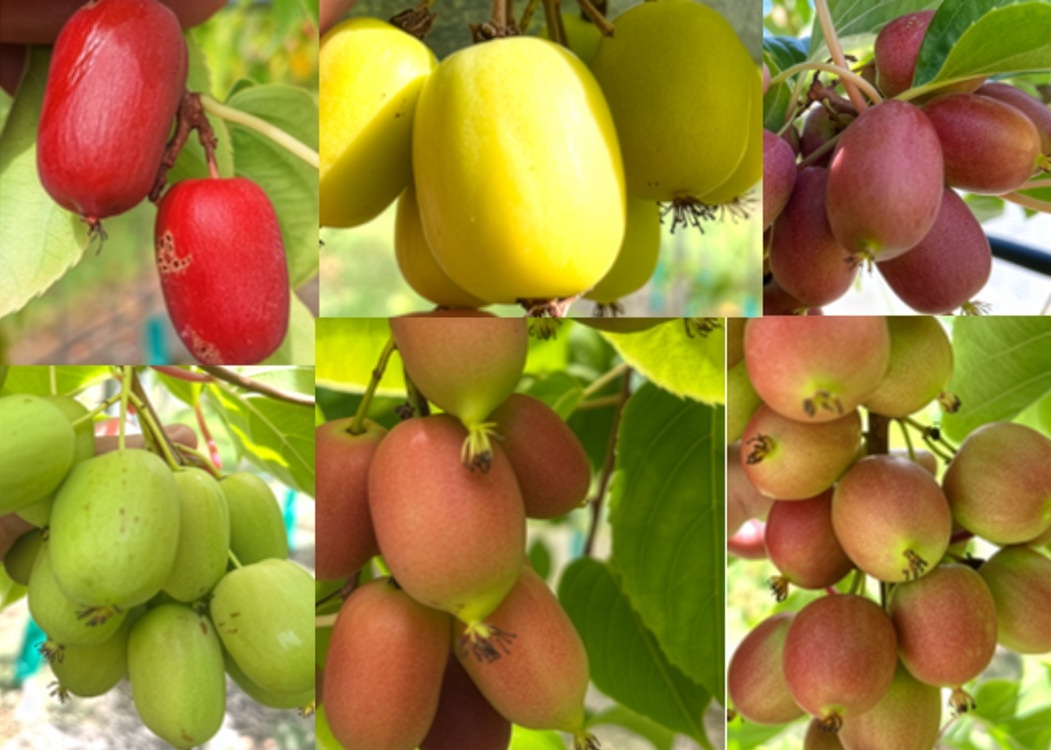
“AbacusBio is collaborating with the Kiwifruit Breeding Centre* (KBC) to support more informed breeding decisions through the development of selection indexes for KiwiBerry. While the commercial breeding programme is still in early stages, selection indexes can help guide trait emphasis and parent selection as the programme continues to develop.”

Mariana Vianna
KiwiBerry (Actinidia arguta) is a relatively new commercial crop in New Zealand compared with the well-established kiwifruit industry. Slightly larger than a grape, KiwiBerry have smooth edible skin and are valued for their sweet flavour and nutritional qualities, including fibre, vitamins and antioxidant content.
Native to East Asia, Actinia arguta was introduced to New Zealand during the 20th Century through imported plant material. Since then, researchers have evaluated its potential and developed breeding programmes to produce cultivars suited to New Zealand growing conditions and market opportunities.
Three kiwiberry cultivars have been released in New Zealand: Takaka Green, Hortgem Tahi and Marju Red. Additional cultivars are being developed by the KBC through its commercial breeding programme.
Challenge: An abundance of measurement data
Like kiwifruit, KiwiBerry has a complex genetic background with substantial genetic diversity. This diversity creates opportunities to develop improved cultivars, but also generates large amounts of phenotypic and pedigree data that must be effectively analysed to support breeding decisions.
Developing new KiwiBerry cultivars is a long-term process. KiwiBerry trees take about five years to produce fruit for evaluation, and the full breeding cycle – from making the initial crosses to releasing a new cultivar – can take 12 to 20 years.
How AbacusBio is adding value
AbacusBio developed a selection index for the KBC KiwiBerry breeding programme. The index combines information on multiple traits, accounting for their heritability, statistical variations and genetic correlations. This enables breeders to compare plants using a single selection criterion that reflects the overall breeding objective, rather than individual traits in isolation.
While the KiwiBerry breeding programme is benefitting from decades of expertise and infrastructure in kiwifruit breeding, its commercial breeding pipeline is still in the early stages and pre-commercial grower trials only began two years ago.
Dr Alastair Currie is a kiwiberry breeder, who has been involved in the fruit’s breeding since 2009 – initially with the New Zealand Institute of Plant and Food Research and now the KBC.
“AbacusBio did a great job of distilling our phenotypic data into an easy to interpret selection index that I can’t wait to apply in our programme.” – Dr Alastair Currie
Next steps
As KiwiBerry cultivars become established in commercial orchards, additional information on production performance and market values will become available. The data can be incorporated into future refinements of the selection index, allowing trait weighting to better reflect commercial performance. Over time, breeding decisions become increasingly aligned with the industry’s long-term needs.
*Kiwifruit Breeding Centre is a 50:50 joint venture between Bioeconomy Science Institute (formally Plant and Food Research) and Zespri International Ltd.
More information
Article: KiwiBerry new variety New Zealand grower trials (2024)