
Caeli Richardson, Kathryn Grant and AbacusBio Sustainability Working Action Group
As agriculture faces increasing pressure to reduce its environmental footprint, the role of genetics in sustainability is gaining attention. But not all biology is created equal.
Photosynthesis vs respiration
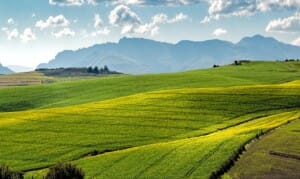
Plants and animals produce energy differently. Plants use photosynthesis, capturing carbon dioxide and sunlight, to grow. Plant yields can therefore increase, without emissions necessarily increasing. In fact, assuming no fertiliser or nitrogen input, higher yields often translate to reduced emissions per unit of output and total emissions per hectare. Plant‑based emissions primarily arise from soil microbial activity, decomposition of organic matter, and any nitrogen inputs that generate nitrous oxide.
Animals, on the other hand, rely on respiration. More output generally requires more feed, which leads to more methane and nitrous oxide emissions. While we can reduce emissions per unit of product, it is harder to reduce gross emissions without sacrificing productivity.
Genetic selection for emissions: progress status
In livestock, we are making real progress. AbacusBio conducted impact analysis work with the Global Methane Genetics initiative (Wageningen University & Research), an international initiative encouraging countries to work together to accelerate genetic progress in methane reduction. Our analysis showed that selecting for methane and efficiency traits in ruminants offered a strong return on investment, in terms of emissions reduction.
Similarly, work in Ireland, Canada and New Zealand demonstrated that genetic progress is already reducing emissions intensity in dairy, beef and sheep systems.
In contrast, plant breeding does not have a direct emissions trait, because such a trait does not exist. However, that does not mean plants are behind.
Plant sustainability
In 2024, AbacusBio launched the world’s first plant sustainability index at the International Research Symposium on Agricultural Greenhouse Gas Mitigation in Berlin. The index is to help plant breeding companies create varieties that require less water and produce less associated emissions, while also optimising yield, health and disease resistance. The index shows plant breeders can target both intensity and gross emissions using the same set of traits. In time, the index could include traits (such as water use, nutrient efficiency and carbon footprint) giving breeders a holistic view of sustainability.
Animal sustainability
Animal sustainability indexes balance emissions traits – like methane efficiency and feed conversion – with productivity and farmer adoption. AbacusBio has worked on animal indexes for clients, including Lactanet, Semex, DataGene Ltd and the Irish Cattle Breeders Federation (ICBF). These indexes provide a practical tool that helps farmers make climate-smart breeding decisions without compromising profitability.
Challenges and opportunities
For animals, we have the traits and the data necessary to make genetic improvement, but biology limits how far we can go without trade-offs.
For plants, the biology is more forgiving, but sustainability traits are harder to measure and less integrated into existing breeding programmes.
However, plant or animal, the way forward is clear. Genetics offers a permanent, cumulative and cost-effective way to reduce agriculture’s environmental impact. Whether it is through methane-efficient cows or nitrogen-smart crops, the future of sustainable farming be strongly driven by selective breeding and genomic technologies.
Next critical step
To advance genetic selection for lower environmental footprint plant varieties and animals, the impact of genetics must be properly accounted for and integrated into carbon calculators and national greenhouse gas inventories.
AbacusBio expertise and innovation is at the forefront of this work, helping embed genetic impact into environmental assessment frameworks and decision-making tools.
Keep up to date with AbacusBio news, by subscribing to our newsletter HERE and following us on LinkedIn, Facebook and Bluesky.